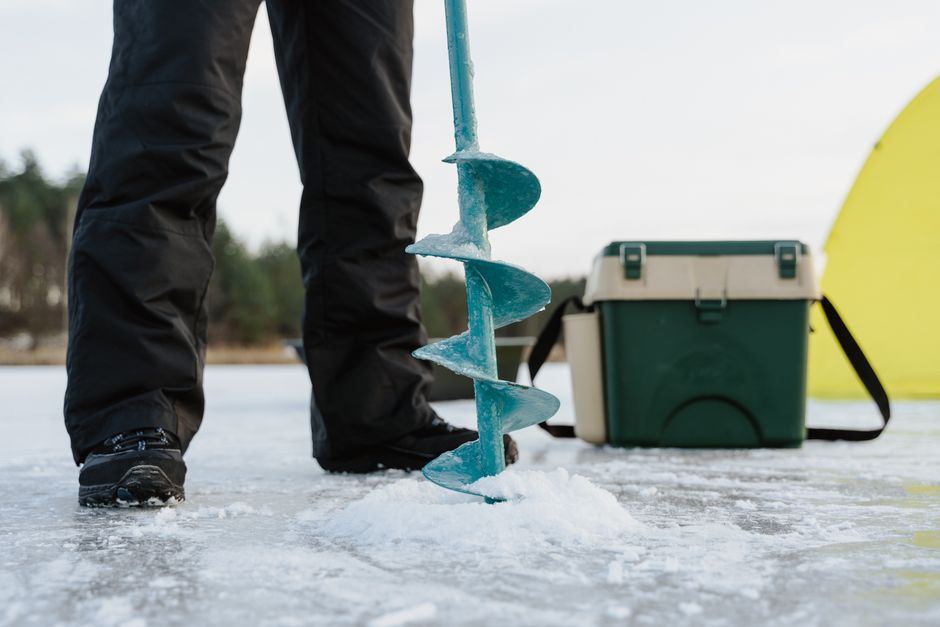
ice auger hole diameter (6-inch vs. 8-inch vs. 10-inch) buying guide

The blade diameter decides which fish actually fit through the hole

A bigger hole isn't automatically the better hole

Hole diameter decides which fish you can land through the ice and how much extra effort or battery you burn getting there. Here's how 6", 8", and 10" augers compare.

Compare hole sizes
⚡ Limited-time perk

Free two-day delivery on your pick

Long hours on the ice go faster with a good story -- start a free Audible trial and get your first audiobook free.

Sponsored link -- we may earn a fee if you sign up. No extra cost to you.

Quick answer: Our top pick for ice auger hole diameter (6-inch vs. 8-inch vs. 10-inch) is the K-Drill 6 Inch Ice Auger (Auger Only) (Best 6" (Panfish)). If you're looking for best 8" (all-around), the StrikeMaster Lithium 40V Ice Auger is a strong alternative.

Diameter is a species decision, not just a drilling-effort one

Reviewed by the FrostJig team · last updated 2026-08-24

Every auger in our main comparison cuts a specific hole diameter, and that number matters more than most first-time buyers expect: a 6-inch hole is plenty for panfish but will not land a pike, while an 8-inch hole handles walleye and most pike but still comes up short for a trophy muskie or lake trout, which typically need a 10-inch hole to fit through.

The trade-off is effort and battery life, not just fish size. Cutting an 8-inch hole removes nearly double the ice volume of a 6-inch hole, and a 10-inch hole removes even more -- on an electric auger, that directly cuts into how many holes you get per charge. That's exactly why the K-Drill's tiny 6-inch bit can run all day on a basic cordless drill, while a 10-inch gas auger burns through fuel faster hole for hole.

Most anglers don't need to pick just one size. A dedicated panfish angler on shallow water is well served by a 6" bit alone, but anyone targeting a mix of species -- or fishing water that holds both panfish and pike -- is better off defaulting to 8" as the all-around size and only stepping up to 10" if trophy lake trout or muskie are a realistic target on the water being fished.

Match diameter to your target species, not the biggest hole available

6" covers panfish, 8" covers walleye and most pike, and 10" is for muskie, lake trout, and other trophy fish that genuinely need the extra width to land through the ice.

Bigger holes cost more effort and battery per hole

Roughly double the ice has to be cut for an 8" hole versus a 6" hole, and a 10" hole removes even more -- factor that into how many holes an electric auger's battery will realistically get you through in a day.

A 10" hole is a safety consideration, not just a fishing one

Holes 10" and wider are wide enough for an angler to step into and risk an ankle or leg injury -- mark them clearly or cover them when moving around on the ice.

A 6" drill-powered bit is a legitimate standalone option, not just a backup

If panfish and shallow water are the only targets, a lightweight drill-powered bit like the K-Drill skips the cost and weight of a dedicated auger power head entirely.

Product Best For Price Rating
K-Drill 6 Inch Ice Auger (Auger Only) Best 6" (Panfish) $90 - $130 4.3/5
StrikeMaster Lithium 40V Ice Auger Best 8" (All-Around) $280 - $330 4.3/5
Eskimo Mako M43 Gas Ice Auger Best 10" (Big Fish) $300 - $330 4.5/5
Best 6" (Panfish)

K-Drill 6 Inch Ice Auger (Auger Only)

4.3

A lightweight, drill-powered 6-inch auger bit that pairs with any half-inch-chuck cordless drill, aimed at panfish and shallow-water anglers who don't need a dedicated power head at all.

  • Around 5 lbs -- the lightest way to drill a hole in this comparison
  • No dedicated motor or battery to buy -- uses a cordless drill you likely already own
  • Fast, low-effort drilling for panfish-sized holes
  • Too small for walleye, pike, or lake trout -- panfish and small water only
  • Requires your own compatible cordless drill, sold separately
Best 8" (All-Around)

StrikeMaster Lithium 40V Ice Auger

4.3

Our main-lineup pick in its 8-inch configuration -- large enough for walleye and most pike while staying quicker to drill than a 10-inch hole, which is why 8" is the size most anglers default to.

  • Fits walleye, pike, and most trout -- covers the vast majority of species anglers target
  • Meaningfully less ice to cut per hole than a 10" auger
  • No gas mixing or fumes
  • Still too narrow to comfortably land a trophy muskie or large lake trout
  • Battery drains faster per hole than the 6" bit, though far slower than the 10" size
Best 10" (Big Fish)

Eskimo Mako M43 Gas Ice Auger

4.5

Our main-lineup pick in its 10-inch configuration, built for muskie, lake trout, and other trophy fish that simply won't fit through an 8-inch hole -- continuous gas power offsets the extra cutting effort a wider blade demands.

  • Wide enough for muskie, lake trout, and other trophy-class fish
  • Continuous gas power doesn't taper off the way a heavily loaded battery can on the widest cut
  • Stainless steel Quantum blades hold their edge in dirty ice
  • Nearly double the ice volume to cut versus an 8" hole, which slows down hole-hopping
  • 10"+ holes are wide enough to be a step-in hazard -- mark or cover them when not in use

Frequently Asked Questions

What size hole do I actually need for walleye?

An 8-inch hole comfortably lands most walleye and is the size most anglers default to as an all-around choice, since it also covers most pike without cutting more ice than necessary. A 6-inch hole is really built for panfish, and you'd struggle landing a larger walleye through it.

Why would I ever need a 10-inch hole instead of 8-inch?

Trophy-class fish like muskie and large lake trout genuinely won't fit through an 8-inch hole, so a 10-inch auger is a requirement rather than a preference if those species are a realistic target on the water you're fishing. For anglers not targeting trophy fish, the extra ice volume a 10-inch hole removes just slows down hole-hopping for no benefit.

How much more effort does a bigger hole actually take to drill?

Roughly double the ice volume has to be cut for an 8-inch hole versus a 6-inch hole, and a 10-inch hole removes even more than that. On an electric auger, that directly reduces how many holes you'll get out of a single charge, which is worth factoring in before sizing up "just in case."

Is a 6-inch drill-powered bit like the K-Drill a legitimate main auger, or just a backup?

It's a legitimate standalone option if panfish and shallow water are your only targets -- at around 5 lbs and running off a cordless drill you likely already own, it skips the cost and weight of a dedicated power head entirely. It's undersized for pike, walleye, or anything larger, so it only makes sense as a primary auger for anglers who genuinely stick to panfish.

Are wider holes actually a safety concern?

Yes -- holes 10 inches and wider are wide enough for an angler to step into and risk an ankle or leg injury, which isn't a real risk with 6 or 8-inch holes. If you're drilling 10-inch holes, mark them clearly or cover them when moving around the ice, especially in a group or low-light conditions.

Can I switch auger bit sizes on the same power head, or do I need a separate auger for each diameter?

That depends on the specific power head -- some auger systems (including StrikeMaster and Eskimo Mako models) offer interchangeable bits in different diameters for the same motor, while others are sold as a fixed size. Check the specific product listing before assuming you can swap between 6", 8", and 10" on one unit.