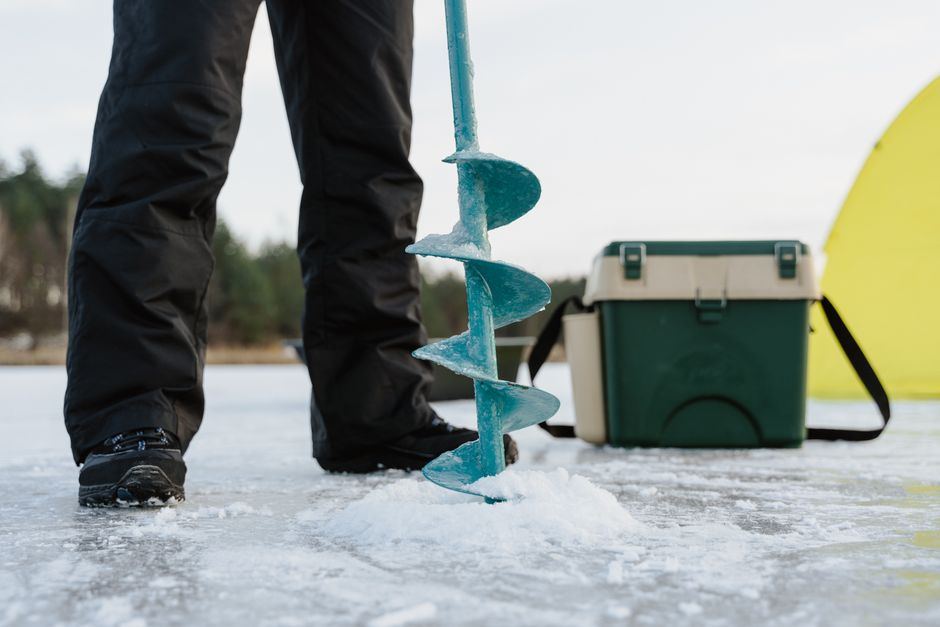
Two ways to drill a hole, with a real trade-off between them
Reviewed by the FrostJig team · last updated 2026-08-24
Every auger in our main comparison runs on one of two power types: rechargeable lithium battery, or 2-cycle gas. Both will get you through a foot or more of ice, but they trade off differently on speed, weight, mess, and how they perform once you're several hours into a full day on the ice.
Gas augers drill slightly faster -- roughly 45 seconds per hole against about a minute for a battery auger -- and don't slow down as fuel burns off the way a battery's output can taper near empty. That makes gas the better fit for hole-hopping, where you're drilling well over a hundred holes in a day chasing fish. The trade-off is 2-cycle oil-gas mixing, fuel odor, pull-starting, and more weight and noise than an electric auger.
Electric augers skip all of that: no mixing, no fumes, and a simple charge-and-go routine, plus they're generally lighter to carry out onto the ice. The ION X's roughly 1,600-inch-per-charge rating covers a full day of moderate drilling for most anglers, while the StrikeMaster trades some of that runtime for a lower price. The real weak point is cold-weather battery performance -- keep the battery insulated or warm between uses, especially in sub-zero conditions.
For most anglers who drill a handful of holes around a shelter or a few tip-up spots, either electric auger here is the simpler, lower-maintenance choice. For anglers who hole-hop all day searching for fish, the Eskimo Mako's continuous gas power is the safer bet.
How many holes do you actually drill in a day?
A handful of holes around a shelter favors either electric auger here; drilling well over 100 holes hole-hopping favors the continuous power of the Eskimo Mako gas auger.
Cold-weather battery care
Lithium batteries lose capacity in extreme cold -- keep the battery insulated in a jacket or warm bag between holes if you're running an electric auger in sub-zero conditions.
Weight adds up over a long walk onto the ice
Electric augers in this comparison run 22-25 lbs against roughly 30+ lbs for the gas Eskimo Mako -- a meaningful difference if you're hauling gear any real distance.
Fuel logistics vs. charging logistics
Gas means mixing 2-cycle fuel and carrying it out onto the ice; electric means charging a battery ahead of time and, ideally, bringing a spare for a full day out.